Wood Hardness Chart PDF: A Comprehensive Guide
Wood hardness chart PDFs are invaluable resources for builders, woodworkers, and flooring specialists. These documents consolidate Janka ratings, aiding informed wood selection for diverse projects.

Understanding Wood Hardness & the Janka Scale
Wood hardness is a crucial property when selecting materials for construction, furniture, or flooring, directly impacting durability and resistance to wear and tear. Quantifying this hardness isn’t subjective; it’s achieved through standardized tests, most notably the Janka hardness test. This test, developed by Austrian-born Gabriel Janka, provides a numerical representation of a wood species’ resistance to indentation.
The Janka scale isn’t measuring absolute hardness, but rather relative hardness – how well a wood resists denting and wear compared to other woods. The test involves embedding a .444-inch steel ball halfway into a wood sample and recording the force required in pounds-force (lbf). A higher number signifies greater resistance to indentation, indicating a harder wood. Understanding this scale is fundamental when interpreting data found within a wood hardness chart PDF, allowing for informed decisions based on project requirements and anticipated usage.
Essentially, the Janka scale offers a practical benchmark for comparing wood species, moving beyond vague descriptions like “soft” or “hard” to provide concrete data for material selection.
What is the Janka Hardness Test?
The Janka hardness test is a widely accepted industry standard for determining the resistance of wood to denting and wear. Developed by Gabriel Janka, the test employs a precise methodology to provide a quantifiable measure of wood hardness. A steel ball, precisely 0.444 inches (11.28 mm) in diameter, is embedded halfway into a sample of wood.
This isn’t done by hand; a specialized machine applies an increasing force until the ball is embedded to the specified depth. The force required to achieve this – measured in pounds-force (lbf) – represents the wood’s Janka hardness rating. This rating isn’t an absolute measure of hardness, but a comparative value. A higher lbf value indicates greater resistance to indentation and, therefore, a harder wood.
The test’s standardized nature ensures consistent and reliable results, making wood hardness chart PDFs based on Janka ratings a trustworthy resource. Understanding the test’s mechanics is key to interpreting the data presented in these charts and selecting the appropriate wood for a given application.
The Janka Scale: Range and Interpretation
The Janka scale typically ranges from 0 to over 4000 lbf, providing a broad spectrum for classifying wood hardness. Woods scoring near zero, like balsa, are exceptionally soft and easily dented, making them unsuitable for high-traffic flooring. Conversely, woods exceeding 4000 lbf, such as Australian Buloke, represent the pinnacle of hardness and durability.
Interpreting Janka ratings within a wood hardness chart PDF requires understanding these benchmarks. Woods between 600-1000 lbf are considered moderately hard, suitable for general furniture and interior trim. Ratings of 1000-1500 lbf indicate good hardness, often found in popular flooring choices like oak and maple.
Higher ratings (1500+ lbf) signify exceptional durability, ideal for demanding applications like gym floors or heavy-duty furniture. However, hardness isn’t the sole determinant; factors like grain structure and density also influence performance. Utilizing a chart allows for comparative analysis, aiding informed decisions based on project needs.
Why Use a Wood Hardness Chart PDF?
A wood hardness chart PDF is an essential tool for anyone working with wood, offering a quick and reliable reference for material properties. These charts consolidate Janka hardness ratings, enabling informed decisions regarding wood selection for specific applications, preventing costly mistakes.
For flooring projects, a chart helps determine suitability based on anticipated foot traffic and potential for wear. Furniture makers benefit by choosing woods that can withstand daily use and resist denting. Carpenters rely on these charts to select appropriate materials for structural components, ensuring longevity and stability.
PDF format provides portability and easy access, allowing users to consult the data on-site or in the workshop. Charts also facilitate comparisons between domestic and exotic species, broadening material options. Ultimately, utilizing a chart streamlines the selection process, optimizing project outcomes and material investment.

Common Wood Species & Their Janka Ratings
Wood hardness charts detail Janka ratings for numerous species, categorizing them as softwoods or hardwoods. This data is crucial for selecting appropriate wood for projects.
Softwoods: Janka Ratings & Uses
Softwoods, generally sourced from coniferous trees, typically exhibit lower Janka hardness ratings compared to hardwoods. This doesn’t necessarily equate to weakness, but rather a different structural profile suited for specific applications. Common softwoods like Balsa (70 lbf) are exceptionally soft, ideal for crafting and model building where easy workability is paramount.
Pine, with a Janka rating around 380-870 lbf depending on the species (Eastern White Pine being softer, Southern Yellow Pine harder), is widely used in construction for framing, furniture making, and interior trim. Its affordability and ease of nailing contribute to its popularity. Fir (420-500 lbf) is another frequently utilized softwood, known for its strength-to-weight ratio, making it suitable for structural components and plywood.
Cedar, ranging from 350-900 lbf, is prized for its aromatic qualities and resistance to decay, commonly found in outdoor applications like siding, decking, and closets. Redwood (450-900 lbf) shares similar characteristics, often used for exterior projects requiring durability. Wood hardness chart PDFs clearly illustrate these varying ratings, enabling informed decisions based on project demands and desired aesthetic qualities. Understanding these ratings helps determine suitability for load-bearing applications, resistance to denting, and overall longevity.
Hardwoods: Janka Ratings & Uses
Hardwoods, originating from deciduous trees, generally demonstrate higher Janka hardness ratings, signifying greater resistance to denting and wear. Maple, with a Janka rating of around 1450 lbf, is a popular choice for flooring, furniture, and cutting boards due to its durability and fine grain. Oak (White Oak: 1360 lbf, Red Oak: 1290 lbf) is another widely used hardwood, renowned for its strength, water resistance (particularly White Oak), and attractive grain patterns, making it ideal for flooring, cabinetry, and boat building.
Walnut (1010 lbf) offers a rich, dark color and is favored for high-end furniture, veneers, and gunstocks. Cherry (950 lbf) is prized for its reddish hue and smooth texture, commonly used in furniture and cabinetry. Beech (1300 lbf) is a strong, hard wood often used for furniture frames and flooring.
Wood hardness chart PDFs are crucial for comparing these diverse hardwood options. Selecting the appropriate hardwood depends on the intended use; higher ratings are preferred for high-traffic areas and demanding applications. These charts provide a quick reference for understanding the relative durability and workability of each species, ensuring optimal project outcomes and longevity.

Comparing Popular Flooring Woods
When selecting flooring, understanding Janka hardness ratings is paramount. Oak, a staple in flooring, offers good durability with White Oak (1360 lbf) being slightly harder and more water-resistant than Red Oak (1290 lbf). Maple (1450 lbf) provides a harder, smoother surface, ideal for high-traffic areas, but can show dents more prominently. Hickory (1820 lbf) stands out as one of the hardest domestic flooring options, offering exceptional resistance to wear and tear.
Brazilian Cherry (Jatoba) boasts a Janka rating around 2350 lbf, making it incredibly durable, though it can be more challenging to work with. Bamboo flooring varies significantly; strand-woven bamboo can exceed 3800 lbf, rivaling some hardwoods, while traditional bamboo is softer.
Wood hardness chart PDFs facilitate direct comparisons. Consider lifestyle and foot traffic when choosing. Softer woods like pine are less suitable for busy households. Utilizing these charts ensures informed decisions, balancing durability, aesthetics, and budget. A reliable PDF will detail not only the Janka rating but also grain patterns and typical costs, aiding a comprehensive flooring selection process.
Accessing & Utilizing Wood Hardness Charts
Reliable wood hardness chart PDFs are readily available online from forestry organizations and woodworking retailers. These charts simplify wood selection based on Janka ratings.
Finding Reliable Wood Hardness Chart PDFs Online
Locating trustworthy wood hardness chart PDFs requires discerning sources. Numerous websites offer these charts, but accuracy varies significantly. Reputable forestry organizations, like the Wood Database (wood-database.com), frequently provide comprehensive and meticulously researched charts. University forestry departments and government agencies dedicated to natural resources are also excellent sources for dependable data.
Avoid relying solely on vendor-supplied charts, as these may selectively highlight woods they sell. Look for charts that clearly state the testing methodology – specifically, the Janka hardness test – and the date of the data compilation. Older charts might not reflect recent species classifications or updated testing results.
PDF format is ideal as it preserves formatting and ensures consistent presentation across devices. When downloading, verify the file source and scan for potential malware. Cross-reference information from multiple charts to confirm consistency and identify any discrepancies. Remember, a reliable chart will list a wide range of species with corresponding Janka ratings, providing a solid foundation for informed wood selection.
Interpreting Data Within a Wood Hardness Chart PDF

Successfully utilizing a wood hardness chart PDF hinges on understanding the presented data. The core metric is the Janka hardness rating, measured in pounds-force (lbf). Higher numbers indicate greater resistance to denting and wear, signifying a harder wood. Charts typically list species alphabetically alongside their corresponding Janka values.
Remember, the Janka scale isn’t absolute; it’s a relative measure of hardness. A wood with a rating of 1200 lbf is harder than one rated at 800 lbf, but doesn’t guarantee superior performance in all applications. Consider the wood’s grain structure and density alongside the Janka rating.
Charts often categorize woods as softwoods (generally below 700 lbf) or hardwoods (typically above 700 lbf), though exceptions exist. Pay attention to any notes regarding variations within a species – hardness can differ based on growth location and tree maturity. Use the chart to compare options for your specific project, balancing durability with workability and aesthetic preferences.
Factors Affecting Wood Hardness Beyond the Janka Scale
While the Janka hardness test provides a valuable benchmark, several factors influence a wood’s performance beyond its numerical rating. Wood hardness chart PDFs don’t always capture these nuances. Moisture content significantly impacts hardness; drier wood generally exhibits higher resistance to indentation.
Grain pattern plays a crucial role. Straight-grained woods tend to be more uniform in hardness, while those with knots or irregular grain can have localized variations. Density, closely related to Janka, isn’t the sole determinant – fiber structure and cell size also contribute to overall strength.
The specific part of the tree influences hardness; wood from the lower trunk is typically denser than that from higher branches. Environmental factors during growth, like soil composition and climate, can also affect wood properties; Therefore, consider these elements alongside the Janka rating when selecting wood, recognizing the chart offers a useful, but incomplete, picture.

The Hardest Woods in the World
Wood hardness chart PDFs reveal Australian Buloke and Lignum Vitae consistently rank among the densest, most durable woods globally, showcasing exceptional resistance to wear.
Australian Buloke: The Hardest Commercial Wood
Wood hardness chart PDFs consistently identify Australian Buloke (Allocasuarina luehmannii) as the world’s hardest commercial wood. This remarkable species, native to Australia, boasts an astonishing Janka hardness rating exceeding 5,060 lbf – significantly higher than many other hardwoods. Its exceptional density and durability stem from its incredibly fine grain and high oil content.
Historically, Buloke was utilized by Indigenous Australians for creating durable tools, weapons, and implements. Today, due to its scarcity and challenging workability, it’s rarely used in large-scale construction. However, its unique properties make it highly sought after for specialized applications like crafting mallet heads, knife handles, and intricate woodturning projects.
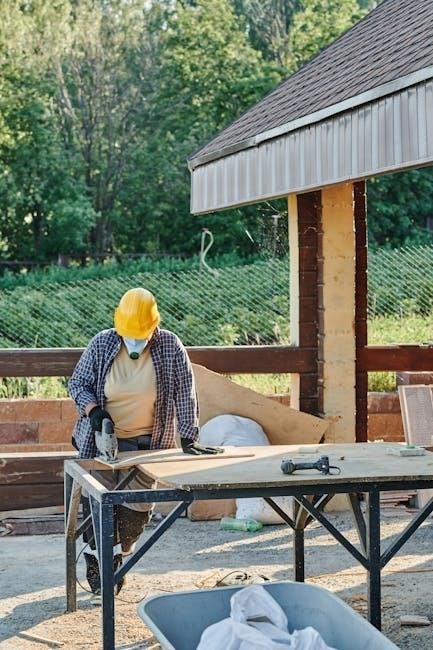
The extreme hardness of Buloke presents challenges for woodworking; it requires specialized tools and techniques. Despite these difficulties, the resulting products are incredibly robust and long-lasting. Examining wood hardness chart PDFs highlights just how exceptional Buloke is compared to commonly used woods, demonstrating its unparalleled strength and resilience.
Lignum Vitae: Historical Significance & Hardness
Wood hardness chart PDFs frequently feature Lignum Vitae (Guaiacum officinale and Guaiacum sanctum) as one of the densest and hardest woods globally, registering around 4,500 lbf on the Janka scale. Historically prized for its self-lubricating properties – due to its high oil content – Lignum Vitae translates to “wood of life” in Latin, reflecting its medicinal uses by Indigenous populations.
For centuries, it was crucial in shipbuilding, specifically for bearings, pulleys, and propeller shafts, reducing friction and wear. Its density also made it ideal for mallets, bowls, and other items requiring durability; However, overexploitation led to its near extinction and current protected status.
Today, obtaining genuine Lignum Vitae is rare and expensive. Wood hardness chart PDFs serve as a reminder of its exceptional qualities and historical importance. While substitutes exist, none fully replicate its unique combination of hardness, lubricity, and resilience, cementing its legacy as a truly remarkable wood.
Snakewood: Unique Appearance & High Density
Wood hardness chart PDFs consistently showcase Snakewood (Brosimum guianense) as an exceptionally dense and visually striking timber, typically scoring around 3,800 lbf on the Janka hardness scale. Native to the Amazon rainforest, its distinctive appearance – resembling snakeskin due to dark, irregular markings against a reddish-brown background – makes it highly sought after for decorative purposes.
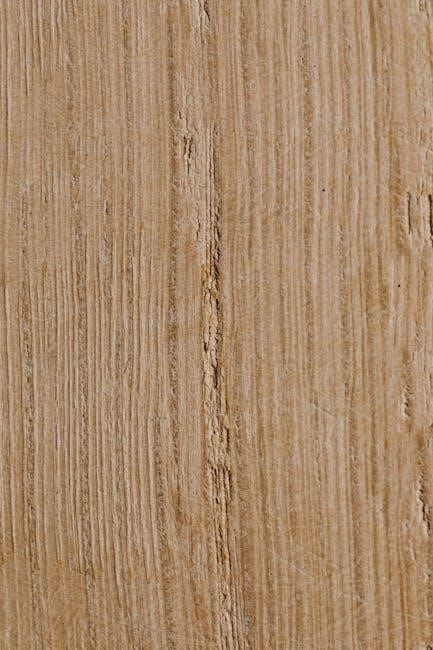
Beyond its aesthetics, Snakewood’s high density and fine texture contribute to its durability and workability, despite its hardness. Traditionally used for walking sticks, knife handles, and small, intricate carvings, it demands skilled craftsmanship due to its tendency to split if not properly handled.
Wood hardness chart PDFs highlight Snakewood’s rarity and increasing cost, driven by habitat loss and sustainable harvesting challenges. Its unique beauty and robust properties continue to make it a prized material, though responsible sourcing is paramount.

Practical Applications of Wood Hardness Data
Wood hardness chart PDFs empower informed decisions regarding wood selection for flooring, furniture, and tool handles, ensuring durability and suitability for intended uses.
Choosing Wood for Flooring
Wood hardness chart PDFs are essential when selecting flooring materials, directly impacting longevity and resistance to wear and tear. A higher Janka rating indicates greater durability, crucial for high-traffic areas like hallways and kitchens. Softer woods, while aesthetically pleasing, are prone to dents and scratches, making them less suitable for these zones.
Conversely, softer woods can be excellent choices for bedrooms or low-traffic areas where comfort underfoot is prioritized. Utilizing a wood hardness chart PDF allows homeowners and installers to match wood species to the specific demands of each room. Consider lifestyle factors – pets, children, and heel heights – when interpreting Janka ratings.
For example, oak and maple, with their robust Janka scores, are popular choices for their resilience. Bamboo flooring, often marketed as eco-friendly, also exhibits impressive hardness, as detailed in these charts. Carefully reviewing a wood hardness chart PDF prevents costly replacements and ensures a beautiful, lasting floor.
Selecting Wood for Furniture Construction
Wood hardness chart PDFs are indispensable tools for furniture makers, influencing both structural integrity and aesthetic finish. The intended use dictates the ideal wood hardness; table legs and chair frames require robust species with high Janka ratings to withstand daily stress. Conversely, decorative veneers or drawer sides can utilize softer, more easily worked woods.
A wood hardness chart PDF helps anticipate how well a wood will hold screws, nails, and joinery, minimizing the risk of splitting or weakening. Hardwoods like maple and cherry are favored for their durability and ability to showcase intricate carvings. Softer woods, such as pine, are suitable for painted furniture or rustic designs where visible grain isn’t paramount.
Understanding the Janka scale, as presented in these charts, allows craftspeople to balance strength, workability, and cost-effectiveness. Selecting the appropriate wood ensures furniture pieces are not only beautiful but also built to last, resisting dents, scratches, and general wear and tear over time.
Wood Hardness & Tool Selection
Wood hardness chart PDFs directly impact tool selection for woodworking projects. Softer woods demand sharper tools and lighter cuts to prevent tear-out, while harder woods necessitate robust tools and potentially slower feed rates. Knowing a wood’s Janka rating informs decisions about saw blade tooth count, chisel angles, and drill bit materials.
Attempting to work extremely hard woods like Australian Buloke with inadequate tools can lead to rapid dulling, increased effort, and potentially damaged tools or workpieces. Conversely, using overly aggressive tools on softer woods risks splintering and imprecise cuts. A wood hardness chart PDF guides the selection of appropriate abrasives too – coarser grits for rapid stock removal from softer woods, and finer grits for polishing harder varieties.
Ultimately, referencing these charts optimizes efficiency, minimizes tool wear, and enhances the quality of woodworking results. Matching the tool to the wood’s hardness ensures a safe, controlled, and satisfying crafting experience.